
The Impact of Brand Equity on Business and Customer Perception
The impact of brand equity on business and customer perception extends far beyond marketing. Strong brand equity influences how customers evaluate quality, trust, and value, while helping businesses increase loyalty, improve retention, and strengthen their competitive position. In increasingly crowded markets, brand equity has become one of the most important assets a company can build because it affects both customer behavior and long-term business performance.
What Is the Impact of Brand Equity on Business and Customer Perception?
Brand equity influences how customers perceive a company and how successfully that company competes in the market.
Strong brand equity typically leads to:
- Higher customer trust
- Increased loyalty
- Stronger purchase intent
- Better customer retention
- Greater pricing power
- Improved market positioning
- Sustainable business growth
For customers, brand equity reduces uncertainty and increases confidence.
For businesses, brand equity creates long-term value that supports revenue growth and competitive advantage.
What Is Brand Equity?

Brand equity is the value a brand gains through customer trust, recognition, and positive experiences. It reflects how customers perceive a brand compared to its competitors. When customers consistently choose, recommend, and remain loyal to a brand, strong brand equity develops. This value goes beyond products or services and can influence purchasing decisions, customer loyalty, and overall business performance.
Why Brand Equity Matters
Many businesses focus heavily on sales, marketing campaigns, and customer acquisition.
While these activities are important, they become significantly more effective when supported by strong brand equity.
A company with strong brand equity often benefits from:
- Lower customer acquisition costs
- Higher conversion rates
- Stronger customer retention
- Increased referral activity
- Better customer lifetime value
- Greater resilience during market changes
Brand equity is not simply a marketing asset. It is a business asset.
The strongest brands create value that extends across every stage of the customer journey.
The Core Components of Brand Equity:
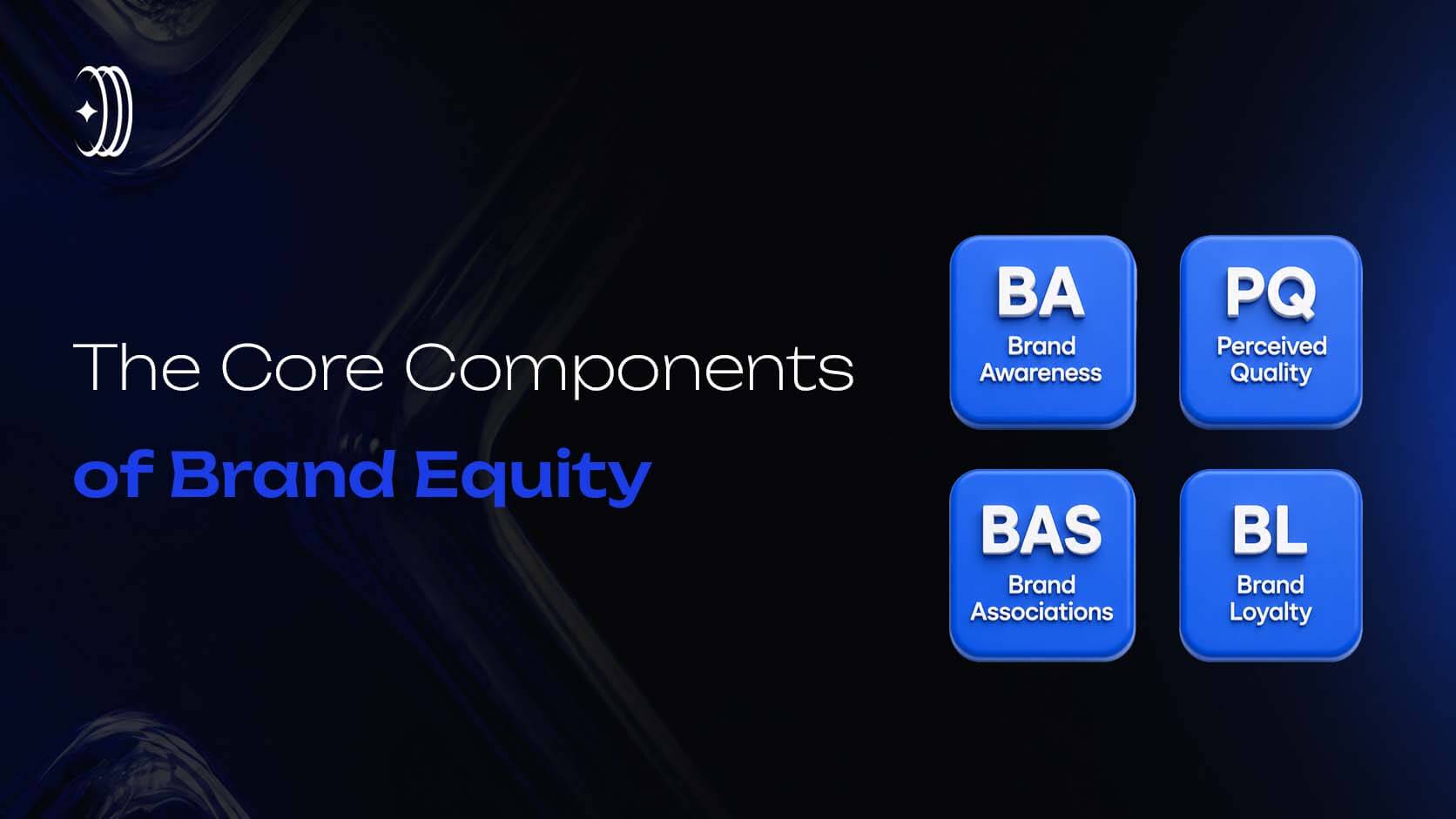
Brand equity is typically built through several interconnected elements.
Brand Awareness
Brand awareness refers to how well customers recognize and remember a brand. When people are familiar with a brand, they are more likely to consider it when making a purchase. However, awareness alone is not enough. A brand can be widely recognized without being trusted or preferred by customers.
Perceived Quality
Perceived quality refers to how customers judge the overall quality of a brand’s products or services. When customers believe a brand offers higher quality, they are more likely to trust it, choose it over competitors, and remain loyal over time.
Brand Associations
Customers associate brands with specific ideas, emotions, and experiences.
Examples include:
- Innovation
- Reliability
- Luxury
- Simplicity
- Trust
- Performance
Strong associations help brands occupy a unique position in the customer’s mind.
Brand Loyalty
Brand loyalty reflects a customer’s willingness to repeatedly choose the same brand over competitors. Strong loyalty increases customer retention, encourages repeat purchases, and contributes to sustainable business growth.
The Impact of Brand Equity on Business
Strong brand equity creates business value by increasing customer loyalty, improving competitiveness, and supporting sustainable growth. Businesses with strong brands are often better positioned to attract and retain customers.
1. Revenue Growth
Strong brand equity drives revenue growth because customers are more likely to purchase from brands they trust and recognize.
Strong brands often benefit from:
- Higher conversion rates
- More repeat purchases
- Increased customer referrals
- Greater customer lifetime value
As trust increases, customer acquisition becomes more efficient, and growth becomes more sustainable.
2. Pricing Power
Customers are often willing to pay more for brands they trust. Strong brand equity helps businesses maintain premium pricing by increasing perceived value and credibility.
3. Customer Retention
Strong brand equity encourages customer loyalty by building trust and emotional connections, making customers more likely to stay with the brand over time.
Benefits include:
- Reduced churn
- Higher repeat purchase rates
- Stronger customer relationships
- Increased advocacy
Loyal customers frequently become brand ambassadors who influence others through recommendations and referrals.
4. Competitive Advantage
Strong brand equity creates a competitive advantage that is difficult for competitors to replicate. It helps businesses strengthen customer relationships and maintain their position in competitive markets.
5. Market Expansion
Strong brand equity supports business growth by making it easier to launch new products and enter new markets. Customer trust reduces adoption barriers and increases the likelihood of success for new offerings.
Brand Equity as a Strategic Business Asset
Many organizations view brand equity as a marketing metric. In reality, it functions as a strategic business asset.
Strong brand equity influences:
- Customer acquisition costs
- Conversion rates
- Customer retention
- Revenue growth
- Market share
- Long-term profitability
This is one reason many of the world’s most valuable companies invest heavily in brand development.
Brand equity contributes directly to sustainable business success. For a deeper understanding of the factors that contribute to long-term growth, explore:
Related Reading: Reasons for a Successful Business
Example: Apple and Nike
Apple and Nike are strong examples of brands with strong brand equity. Customers often choose these brands not only for their products but also for the trust, quality, and values they represent. This highlights an important principle: strong brands sell more than products; they sell trust, identity, and expectations.
The Impact of Brand Equity on Customer Perception
Brand equity influences how customers perceive a brand, evaluate its quality, and make purchasing decisions. Strong brand equity increases trust and can shape customer behavior beyond product features alone.
1. Increased Trust
Strong brand equity builds customer trust by reducing uncertainty and reinforcing perceptions of reliability and consistency.
When customers trust a brand, they are more likely to:
- Purchase for the first time
- Make repeat purchases
- Recommend the brand to others
Trust acts as a shortcut in decision-making.
2. Stronger Purchase Intent
Brand equity influences customer willingness to buy. When customers perceive a brand positively, they often require less persuasion during the buying process.
This increases:
- Conversion rates
- Sales efficiency
- Marketing effectiveness
Strong brands enter the customer’s consideration set earlier and remain there longer.
3. Higher Perceived Quality
Strong brand equity influences how customers perceive quality. As a result, similar products may be viewed differently depending on the strength of the brand behind them.
This perception often affects:
- Purchase decisions
- Satisfaction levels
- Brand preference
The stronger the brand, the greater its ability to shape perceived value.
4. Emotional Connection
Many successful brands build emotional relationships with customers. These relationships extend beyond product functionality.
Customers may associate brands with:
- Personal identity
- Lifestyle aspirations
- Community membership
- Professional success
Emotional connections often create stronger loyalty than product features alone.
5. Long-Term Loyalty
Strong brand equity encourages customers to stay loyal and continue choosing the brand over competitors. This loyalty strengthens customer retention and supports sustainable business growth.
Brand Equity vs Brand Awareness
Brand equity and brand awareness are closely related, but they are not the same thing.
Many businesses focus heavily on increasing awareness without realizing that awareness alone does not create value.
Brand Awareness
Brand awareness measures how familiar customers are with a brand.
It answers questions such as:
- Have customers heard of the brand?
- Can they recognize the logo?
- Do they remember the company name?
Awareness focuses on visibility.
Brand Equity
Brand equity measures the value created by customer perceptions and experiences.
It answers questions such as:
- Do customers trust the brand?
- Do they prefer it over competitors?
- Are they willing to pay more for it?
- Will they recommend it to others?
A brand can have high awareness but weak equity.
For example, a company may be widely recognized because of negative publicity, poor customer experiences, or controversial decisions.
Strong brands need both awareness and positive equity.
Brand Equity vs Brand Identity
Another common misconception is confusing brand equity with brand identity.
Brand Identity
Brand identity refers to how a company presents itself.
It includes:
- Logo
- Colors
- Typography
- Messaging
- Visual style
- Brand voice
Identity is created by the business.
Brand Equity
Brand equity is shaped by customer perceptions and experiences. While businesses create their brand identity, customers ultimately determine brand equity through their trust, loyalty, and interactions with the brand.
How Strong Brand Equity Helps Startups
Many founders assume brand equity only matters for large companies.
In reality, startups often benefit significantly from building strong brand equity early.
Strong brand equity can help startups:
- Build trust faster
- Reduce customer hesitation
- Improve conversion rates
- Increase referrals
- Lower acquisition costs
- Differentiate from competitors
For startups, trust is often a key factor in customer decisions. Strong branding helps build credibility, improve customer understanding, and support long-term growth.
Related Reading: Advice for New Business Start-Up: A Practical Guide for First-Time Founders
How to Measure Brand Equity?
Unlike revenue or profit, brand equity cannot be measured through a single metric.
Instead, businesses evaluate several indicators together.
Brand Awareness Metrics
- Brand recall
- Brand recognition
- Search volume
- Direct traffic
Customer Loyalty Metrics
- Repeat purchase rate
- Customer retention
- Referral activity
- Net Promoter Score (NPS)
Customer Perception Metrics
- Customer satisfaction
- Brand sentiment
- Reviews and ratings
- Social listening insights
Financial Metrics
- Customer Lifetime Value (CLV)
- Customer Acquisition Cost (CAC)
- Market share
- Premium pricing capability
Tracking these indicators provides a more complete understanding of brand equity performance.
Common Mistakes That Damage Brand Equity
Building brand equity takes time, and damaging it can happen quickly.
Some of the most common mistakes include:
Inconsistent Customer Experiences
Customers expect consistency across every touchpoint.
When expectations are not met, trust begins to decline.
Weak Product Quality
Marketing can create attention.
Only quality can sustain equity.
If products fail to deliver value, brand perception suffers.
Misaligned Brand Messaging
When messaging promises one thing and customer experiences deliver another, credibility declines.
Trust is built through consistency between words and actions.
Ignoring Customer Feedback
Customer feedback helps businesses understand brand perception and identify opportunities to improve customer experiences.
Prioritizing Short-Term Sales Over Long-Term Trust
Focusing on short-term revenue at the expense of customer trust can damage brand equity and weaken long-term competitiveness. Strong brands prioritize lasting relationships over temporary gains.
Related Reading: What Are the Main Reasons Businesses Fail? The Complete Founder Guide to Building a Sustainable Business
Madaar Brand Growth Framework

At Madaar, we view brand equity as a business growth asset. To help businesses build stronger brands, we follow a structured framework focused on strategy, customer experience, and long-term value creation.
1. Define
Establish:
- Brand positioning
- Target audience
- Value proposition
- Market differentiation
Strong equity begins with strategic clarity.
2. Align
Ensure that:
- Products
- Services
- Customer experiences
- Messaging
all support the same brand promise.
Alignment strengthens credibility.
3. Deliver
Customers form perceptions through experiences.
Every interaction should reinforce trust and create value.
4. Measure
Track:
- Awareness
- Loyalty
- Customer sentiment
- Retention
- Brand performance
Measurement enables continuous improvement.
5. Scale
Once strong equity exists, businesses can expand more effectively through:
- New products
- New markets
- New customer segments
Brand equity becomes a growth accelerator.
For founders building growth strategies, brand development should be integrated with planning and execution rather than treated as a standalone activity.
Related Reading: Challenges of Business Plan: 11 Common Obstacles and How to Overcome Them
How Madaar Helps Businesses Build Stronger Brands
At Madaar, we help businesses build strong brands through strategic positioning, customer understanding, product alignment, and growth-focused execution.
Our approach combines:
- Brand strategy
- Market research
- Customer insights
- Product positioning
- Go-to-market planning
- Growth systems
The goal is not simply to create a recognizable brand.
The goal is to create a brand customers trust, remember, and choose repeatedly.
Frequently Asked Questions
What is brand equity?
Brand equity refers to the value a brand creates through customer perceptions, trust, loyalty, and preference.
Why is brand equity important?
Strong brand equity improves customer trust, increases loyalty, supports premium pricing, and contributes to long-term business growth.
How does brand equity affect customer perception?
Brand equity influences how customers evaluate quality, trustworthiness, reliability, and overall value.
What is the difference between brand equity and brand awareness?
Brand awareness measures recognition and familiarity. Brand equity measures the value created by customer perceptions and experiences.
Can startups build brand equity?
Yes. Strong brand equity can help startups establish trust, improve conversion rates, and differentiate themselves from competitors.
How do companies measure brand equity?
Businesses typically evaluate awareness, loyalty, customer sentiment, retention, market share, and financial performance indicators.
What factors contribute most to strong brand equity?
Consistency, customer experience, product quality, trust, and brand loyalty are among the most important drivers.
Can strong brand equity improve profitability?
Yes. Strong brand equity often supports premium pricing, higher retention, lower acquisition costs, and sustainable revenue growth.
How does brand equity contribute to business success?
Brand equity strengthens customer relationships, improves competitive positioning, and supports long-term growth.
For a deeper understanding of the factors that contribute to sustainable growth, explore:
The impact of brand equity on business and customer perception goes beyond marketing. Strong brand equity builds trust, drives loyalty, influences purchasing decisions, and supports long-term business growth. Businesses that consistently deliver value and positive customer experiences are more likely to strengthen their brand equity and maintain a competitive advantage. Ultimately, brand equity is not just what customers know about a brand; it’s what they believe about it.